- By: admin
- UK Foundation
- May 22
- Comments (0)

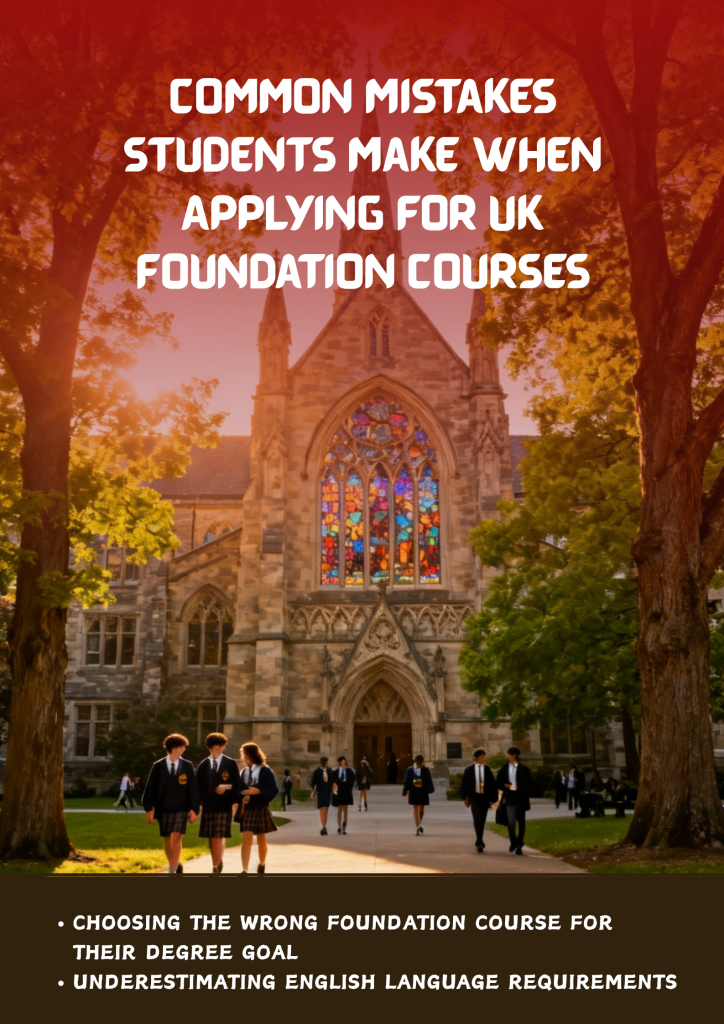
英國 Foundation 課程是為國際學生或未達直入大學標準的學生所設計的銜接課程,幫助他們進入本科學位課程。這類課程提供學術準備、英語支援及專業方向銜接,是進入英國大學的重要途徑之一。
UK foundation courses are designed to bridge the gap between secondary education and undergraduate degrees. They are especially popular among international students who need academic preparation, English language support, or an alternative route into top UK universities.
Despite their accessibility, many students make avoidable mistakes during the application process that can delay admission or reduce their chances of securing a place at their preferred university.
Below are the most common pitfalls—and how to avoid them.
1. Choosing the Wrong Foundation Course for Their Degree Goal
One of the biggest mistakes students make is selecting a foundation programme that does not align with their intended undergraduate degree.
For example, a student interested in Business may mistakenly apply for a general humanities foundation instead of one focused on economics, management, or finance pathways.
Universities in the UK design foundation programmes with specific progression routes. If the subject pathway is not aligned, students may not be eligible to progress to their desired degree.
How to avoid it:
Always check the progression list for the course and confirm which degrees it leads to.
2. Underestimating English Language Requirements
Many students assume foundation courses have low or flexible English requirements. While they are more accessible than direct undergraduate entry, most institutions still require proof of proficiency, commonly through IELTS or equivalent tests.
According to UK university admissions guidance, failing to meet language requirements is one of the most common reasons for delayed or rejected applications.
How to avoid it:
Check the required IELTS score early and allow time for retakes if needed.
3. Submitting Incomplete or Incorrect Academic Documents
Another frequent issue is missing or incorrectly formatted academic transcripts, especially for international applicants.
Universities require official documents translated into English and sometimes notarised. Missing certificates or inconsistent grading formats can delay application review.
How to avoid it:
Prepare certified copies of all academic records and ensure translations are completed by recognised services.
4. Applying Too Late
Foundation programmes, especially at top universities, can fill up quickly. Some students assume there is a long application window and delay applying until the last minute.
However, popular institutions often close applications early once places are filled.
How to avoid it:
Apply as early as possible—ideally 6 to 9 months before the course start date.
5. Writing a Weak Personal Statement
A common mistake is submitting a generic personal statement that does not clearly explain:
- Why the student wants to study in the UK
- Why they chose that specific foundation course
- How it relates to their career goals
Admissions teams look for motivation and clarity, not just academic ability.
How to avoid it:
Be specific about academic interests and long-term goals, and tailor the statement to each institution.
6. Ignoring Entry Progression Requirements
Many students focus only on getting accepted into the foundation programme and overlook the progression requirements needed to move into the undergraduate degree.
These may include minimum grades or passing specific modules.
How to avoid it:
Review progression criteria carefully before applying, not after enrolling.
7. Not Checking University Accreditation and Reputation
Some students prioritise ease of entry over university quality, without checking whether the foundation programme is offered by a reputable institution.
Not all foundation courses offer strong progression rates to top universities.
How to avoid it:
Research university rankings, progression statistics, and student outcomes before applying.
8. Misunderstanding Visa Requirements
International students often assume that a foundation course automatically guarantees a visa approval. However, UK Student Visa requirements still apply, including proof of funds and a Confirmation of Acceptance for Studies (CAS).
According to UK Visas and Immigration guidance, failing to meet visa conditions is a common reason for refusal.
How to avoid it:
Ensure financial documents, CAS requirements, and visa timelines are fully understood before applying.
9. Not Preparing for Academic Style in the UK
UK foundation courses require a shift in academic thinking, including essay writing, critical analysis, and independent learning.
Students sometimes underestimate this transition and struggle in the first term.
How to avoid it:
Familiarise yourself with UK academic expectations before starting the course.
10. Overlooking Cost Planning
Some students focus only on tuition fees and forget to budget for accommodation, living costs, insurance, and travel.
UK universities and government guidance recommend demonstrating sufficient funds for both tuition and living expenses when applying for a visa.
How to avoid it:
Prepare a full budget early, including at least 9–12 months of living costs depending on location.
Final Thoughts
UK foundation courses are an excellent pathway into higher education, especially for international students aiming to enter competitive universities. However, success depends heavily on careful planning and attention to detail during the application process.
Most mistakes are not academic—they are procedural. By understanding entry requirements, preparing documents early, and aligning course choices with long-term goals, students can significantly improve their chances of success.
A strong application is not just about meeting minimum requirements—it is about demonstrating readiness for both the foundation year and the degree that follows.
